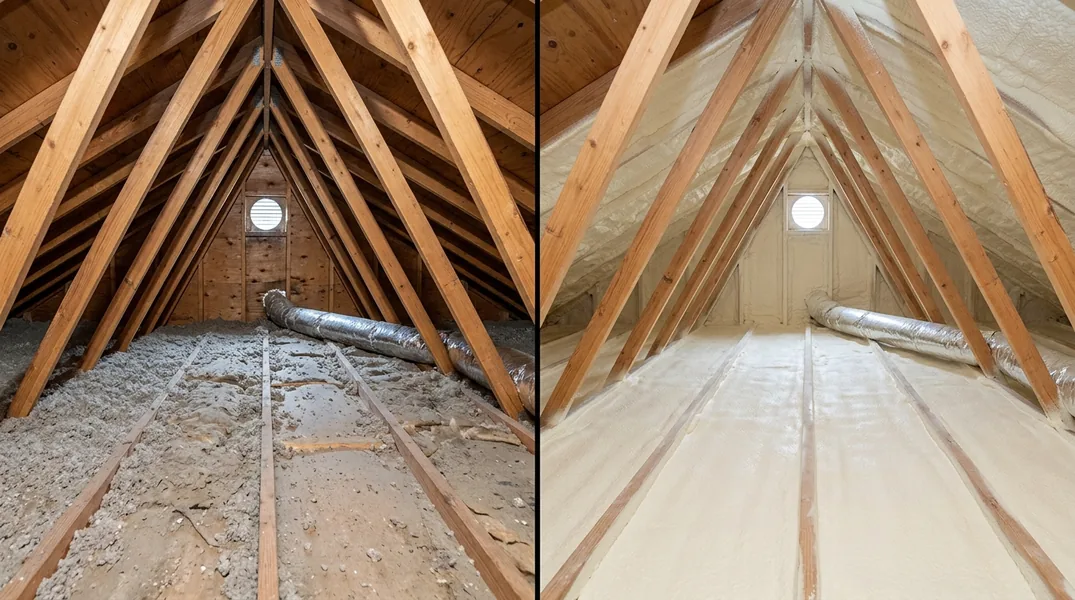
Why 1970s Ranch Homes in Jacksonville Need Better Insulation
Homes built in the 1970s, especially the ranch-style properties scattered throughout Jacksonville and surrounding areas, were constructed during an era when energy efficiency was not a priority. Back then, builders relied on fiberglass batts, blown-in cellulose, or minimal attic coverage to meet the building codes of that decade. Over the past 50 years, these materials have settled, degraded, and developed gaps that compromise your home's thermal envelope.
The typical 1970s ranch home has an attic that loses significant heat in winter and allows hot air to penetrate in summer. This inefficiency drives up your utility bills and makes it harder to maintain comfortable temperatures throughout your living spaces. If you've noticed drafty rooms, inconsistent heating or cooling, or energy bills that seem high compared to your neighbors' homes, your original insulation is likely the culprit. Modern homeowners in Jacksonville are discovering that upgrading to Attic Spray Foam Insulation can transform both comfort and costs.
Is Spray Foam Insulation Worth It for Your Ranch Home
When considering whether spray foam insulation is worth it, homeowners need to look beyond the initial investment and examine the long-term benefits. Spray foam creates an air-tight seal that traditional insulation simply cannot match. Unlike fiberglass batts that leave gaps around pipes, wires, and irregular spaces, spray foam expands to fill every cavity, crack, and void in your attic. This continuous barrier dramatically reduces air leakage, which accounts for a significant portion of energy loss in older homes.
The return on investment becomes clear when you factor in reduced energy consumption, improved comfort, and extended HVAC system life. Homeowners report 15 to 30 percent reductions in heating and cooling costs after upgrading to spray foam insulation. For a 1970s ranch home with a large attic space, these savings can add up to hundreds of dollars annually. Additionally, the improved insulation protects your home's structural integrity by reducing moisture infiltration and temperature fluctuations that can damage wood framing and promote mold growth. When you combine lower utility bills, better comfort, increased home value, and reduced maintenance needs, spray foam insulation proves to be a worthwhile investment for most homeowners.
Is Spray Foam Insulation Safe: Understanding Off Gassing and Installation
Safety is a legitimate concern when considering any home improvement project, and spray foam insulation is no exception. The primary safety consideration involves spray foam off gassing, which occurs during and immediately after installation. When spray foam is applied, it releases volatile organic compounds (VOCs) as the chemical reaction between isocyanate and polyol components takes place. This process typically lasts 24 to 48 hours, during which occupants should vacate the home or remain in well-ventilated areas away from the treated spaces.
Professional installers at Jacksonville Spray Foam Insulation follow strict safety protocols to minimize exposure risks. Proper ventilation during application, use of respiratory protection by trained technicians, and allowing adequate curing time before reoccupancy are standard practices. Once fully cured, spray foam poses no ongoing safety risk to occupants. The foam becomes inert and does not continue to off-gas. However, choosing a certified, experienced contractor is essential because improper installation can increase off-gassing duration and intensity. Always discuss safety procedures with your contractor before work begins and ask about their ventilation and protective equipment protocols.
Spray Foam Insulation Problems and Potential Drawbacks
While spray foam offers significant advantages, understanding spray foam insulation problems helps you make an informed decision. One common issue is over-application or uneven application, which can create dense areas that trap moisture or reduce the material's effectiveness. Poor installation can also damage electrical wiring, plumbing, or ventilation systems if the foam is not applied carefully around existing infrastructure. Additionally, if your attic requires future access for repairs or maintenance, spray foam can make it more difficult to work in those spaces compared to traditional insulation.
Another consideration is that spray foam cannot be easily removed or adjusted once cured. If you need to add wiring, relocate ducts, or make other modifications to your attic, you may face expensive removal and reinstallation costs. Some homeowners also report that spray foam can be noisier during application and requires temporary relocation. Cost is another factor: spray foam typically costs more upfront than fiberglass or cellulose alternatives. However, when you weigh these drawbacks against the superior performance, longevity, and energy savings, many Jacksonville homeowners find that the benefits outweigh the limitations, especially in older 1970s ranch homes where air leakage is most problematic.
Spray Foam Insulation Pros and Cons: A Balanced Comparison
Understanding the complete picture of spray foam insulation pros and cons ensures you choose the right solution for your home. The primary advantages include superior air sealing, higher R-value per inch of thickness, moisture resistance, pest prevention, and long-term durability. Spray foam does not settle or degrade like traditional insulation, maintaining its performance for decades. It also provides structural reinforcement to roof decking and attic framing, which can be valuable in older homes that have experienced settling or structural movement.
On the con side, spray foam requires professional installation, which adds to the cost. The application process is disruptive and requires temporary home evacuation due to off-gassing concerns. Spray foam is also more difficult to modify or remove than traditional insulation if future changes are needed. For some homeowners, the environmental impact of petroleum-based foam products is a concern, though bio-based spray foam alternatives are becoming more available. The key is matching the insulation type to your specific situation. For most 1970s ranch homes in Jacksonville with significant air leakage problems and adequate attic space, the pros substantially outweigh the cons, making spray foam the superior choice over outdated fiberglass batts or blown-in materials.
Attic Spray Foam Insulation Near Me: When to Call a Professional
If you own a 1970s ranch home in Jacksonville and are experiencing comfort or energy efficiency issues, now is the time to consult with a professional spray foam contractor. Signs that you need an upgrade include uneven temperatures between rooms, visible gaps or settling in your current attic insulation, moisture stains or mold growth in the attic, high heating and cooling bills, or pest activity in attic spaces. A qualified contractor can perform a thorough energy audit to identify where your home is losing conditioned air and recommend the most effective solution.
Jacksonville Spray Foam Insulation serves homeowners throughout the Jacksonville area with professional installation of Closed Cell Spray Foam Insulation and Open Cell Spray Foam Insulation tailored to your home's specific needs. Closed cell foam offers higher R-value and superior moisture resistance, making it ideal for attics in humid climates. Open cell foam is more cost-effective and allows for some moisture vapor permeability. Our team will assess your attic conditions, discuss your concerns about safety and performance, and provide a detailed recommendation. Contact Jacksonville Spray Foam Insulation at (910) 554-3447 or request a free estimate to learn how spray foam can transform your home's comfort and efficiency. Don't let another winter or summer pass with an underperforming attic. The investment in proper insulation today will pay dividends in comfort and savings for years to come.
Looking for a professional spray foam insulation contractor in Jacksonville? Jacksonville Spray Foam Insulation responds fast for all your spray foam insulation needs.
Get a Free Quote