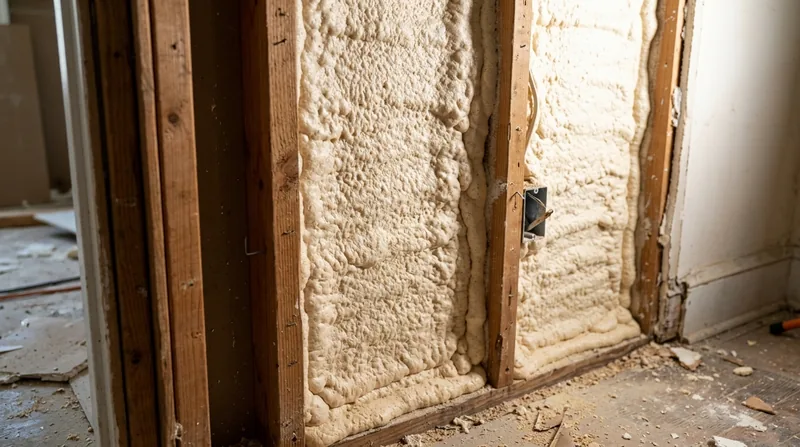




Open cell spray foam insulation in Jacksonville fills wall cavities and attic spaces in the military-era homes that define Onslow County, from downtown Jacksonville's oldest streets through the newer subdivisions spreading toward Hubert and Richlands. Summer heat and humidity drive cooling costs from spring through fall, while vented crawl spaces under much of this housing stock pull in damp coastal air that keeps floors sweating for months. Open cell foam quiets sound, seals air leaks, and costs less than closed cell, making it the right choice for many attic and wall retrofit jobs where moisture control is not the primary driver. We've been installing spray foam insulation since 2012, and we know which homes in this county need what. Call (910) 554-3447 for a free written estimate with R-value and thickness specs, or read on to understand how open cell performs in Jacksonville's climate and where it fits your home.
Why Open Cell Spray Foam Matters in Jacksonville's Older and Newer Homes
Jacksonville's housing stock grew up around the military, with most homes built from the 1970s onward. Older downtown properties have single walls and minimal insulation; newer subdivisions toward Richlands and Swansboro often have vented attics baking under asphalt shingles through the humid months. Open cell foam expands to fill irregular cavities and small gaps that fiberglass batts miss, and it does so at a lower cost per board foot than closed cell. In Jacksonville's climate zone 3A, where summer heat gain and humidity are the dominant load, open cell is often the right answer for attic top-ups and wall retrofits in homes that do not have moisture or condensation as the core problem.
- Open cell foam expands to fill wall cavities in older downtown homes and tight spaces in subdivisions toward Hubert.
- It reduces air infiltration and softens sound transmission through walls and ceilings in two-story homes.
- Lower material cost per board foot makes it the practical choice for attic additions and partial wall insulation.
- Jacksonville's hot, humid summers reward any reduction in ceiling and wall air leaks, and open cell delivers that.
For homeowners in Jacksonville facing rising cooling bills and uneven temperatures between rooms, open cell spray foam is often the most cost-effective retrofit before considering a full closed cell system.
Key info: North Carolina building code governs thermal barriers and ignition barriers for spray foam. Always verify permit requirements with your local Jacksonville building department before scheduling work. We help you navigate what applies at your address.
For more detail on North Carolina's spray foam regulations, see the North Carolina Department of Insurance building code resources.
How We Install Open Cell Spray Foam in Jacksonville Attics and Walls
Open cell foam is sprayed as a liquid and expands in place, filling every corner and void. We start with a site inspection to measure the space, confirm the substrate is dry and sound, and identify any air leaks or moisture sources that must be addressed before we spray. The installation happens in multiple thin passes to control density and ensure even coverage. Mechanical ventilation runs during cure, and we specify a re-entry window of 24 to 48 hours so your home is safe to occupy and the smell clears completely.
- We inspect the attic or wall cavity, measure square footage, and confirm the substrate is dry and structurally sound.
- We seal obvious air leaks and gaps around penetrations, ductwork, and rim joists before spraying foam.
- We spray open cell in thin, controlled passes, building up the specified thickness and R-value for your zone.
- We run mechanical ventilation during cure to manage off-gassing and ensure the space is safe to re-enter.
- We provide a written estimate and work schedule so you know exactly what to expect and when the job is complete.
This methodical approach prevents the common mistakes that lead to poor performance, bad smell, and unhappy homeowners. It also ensures we meet Jacksonville building code for thermal and ignition barriers.
Local example: A rancher in Richlands with a vented attic and rising summer bills had us spray 5.5 inches of open cell over the top plates and along the rim joists. Cost was roughly 40 percent less than closed cell, and the homeowner gained R-19 attic coverage and a meaningful reduction in heat gain. The same home would have needed closed cell only if it had a sealed, unconditioned crawl space underneath or a metal building exterior.
For a complete walkthrough of our spray foam process and what happens on the day of installation, see our page on attic spray foam insulation in Jacksonville.
Open Cell vs. Closed Cell: Methods and Applications
| Approach | Description | Best for |
|---|---|---|
| Open Cell | Expands to 3.5 to 4 lbs per cubic foot, R-3.5 to R-3.7 per inch, semi-permeable to water vapor | Jacksonville attics, wall cavities, sound dampening, budget-conscious retrofits |
| Closed Cell | Expands to 1.5 to 2 lbs per cubic foot, R-5.8 to R-6.5 per inch, vapor barrier, higher cost | Metal buildings, sealed crawl spaces, condensation control, high-performance new construction |
| Top-Up Blown-In | Loose-fill fiberglass or cellulose over existing insulation, lowest cost per R-value | Sound attics with existing fiberglass, when spray foam is overkill and air sealing is not the goal |
| Wall Injection | Open cell foam injected into closed wall cavities from outside, no demolition required | Pre-1980 Jacksonville homes with hollow walls, retrofit without gutting drywall |
Open cell is the right first choice for most Jacksonville attics and sound control. Closed cell belongs in metal buildings and sealed crawl spaces where moisture or vapor control is the driver. If your attic already has fiberglass and is in good shape, adding more blown-in insulation is sometimes the right answer, and we'll tell you plainly if that's the case. For walls in older homes, wall injection foam retrofits hollow cavities without demolition.
Open Cell Spray Foam Insulation Cost in Jacksonville: What to Expect
Open cell spray foam in Jacksonville typically runs starting at $0.55 per board foot, with the final price depending on thickness, R-value target, access to the space, and how much prep work is needed. A typical attic top-up of 4 to 6 inches across 1,200 square feet runs between $2,600 and $4,200, not including removal of old insulation. Wall injection foam costs more per board foot because the work is slower and requires drilling, but it avoids demolition. Crawl spaces and rim joists are smaller jobs, typically $800 to $1,500, and often pair well with open cell because moisture control is rarely the primary goal in those zones in Jacksonville's climate.
Factors that move the price up include:
- Removal of old insulation, old attic insulation, or contaminated materials adds labor and disposal cost.
- Difficult access, low headroom, or complex roof framing slows installation and increases crew time.
- Thermal barrier and ignition barrier materials required by code add material cost.
- Crawl spaces with standing water or active moisture must be dried and repaired before foam is sprayed.
Always get 2 to 3 written estimates from contractors in Jacksonville so you can compare R-value specs, thickness, and total board feet. A low-ball price with no R-value and no thickness spec is a red flag. For a detailed pricing overview and to request a free estimate with specific numbers for your home, visit our pricing page or call (910) 554-3447.
What to Look for When Hiring an Open Cell Spray Foam Contractor Near Jacksonville
Spray foam installation is not a regulated trade in North Carolina the way roofing or HVAC is, so contractor quality varies widely. A good contractor shows up with a written estimate that names R-value and thickness, runs mechanical ventilation during cure, and specifies a re-entry window of 24 to 48 hours. Ask to verify insurance coverage and ask for references from recent jobs in Jacksonville, Richlands, or Sneads Ferry. If a contractor promises immediate re-entry, offers a price far below market with no inspection, or cannot explain the difference between open cell and closed cell, walk away.
Permitting and contractor registration vary by city across Greater Jacksonville. Some cities require a permit for attic work; others do not. Always check with your local building department before hiring, and choose a contractor who will help you navigate what applies at your address, not one who claims to handle all permitting without asking.
- Verify full insurance coverage and ask to see the certificate before work begins.
- Request written estimates with R-value, thickness, board footage, and material specifications.
- Ask for references from homes in Jacksonville or nearby areas and follow up with at least two.
- Confirm the contractor will run mechanical ventilation during cure and provide a re-entry timeline.
- Check the city or county building department to understand what permits apply to your address.
When you are ready to move forward, contact us for a free estimate or call (910) 554-3447. We'll walk you through the process, answer your questions, and give you a firm price before any work begins.
Open Cell Spray Foam Insulation in Jacksonville: Pricing Guide
| Service | Price | Details |
|---|---|---|
| Open Cell Attic Insulation | Starting at $0.55/board ft | Spray to specified R-value and thickness, includes mechanical ventilation during cure and re-entry timeline |
| Wall Injection Foam Retrofit | Starting at $0.75/board ft | Injected into closed cavities without demolition, slower per board foot due to drilling and cavity access |
| Crawl Space or Rim Joist Foam | Starting at $0.60/board ft | Smaller square footage with targeted application, typical job runs $800 to $1,500 total material and labor |
| Insulation Removal and Replacement | On estimate | Removal cost depends on material type, volume, and disposal; combined with spray foam quote for full retrofit |
| Travel and Estimate | Included and Free | No separate mileage or call-out fee in Jacksonville and surrounding areas; written estimate within 24 hours |
Indicative pricing, the exact cost depends on square footage, finish, and site access. Free personalized estimate within 24h at (910) 554-3447.


