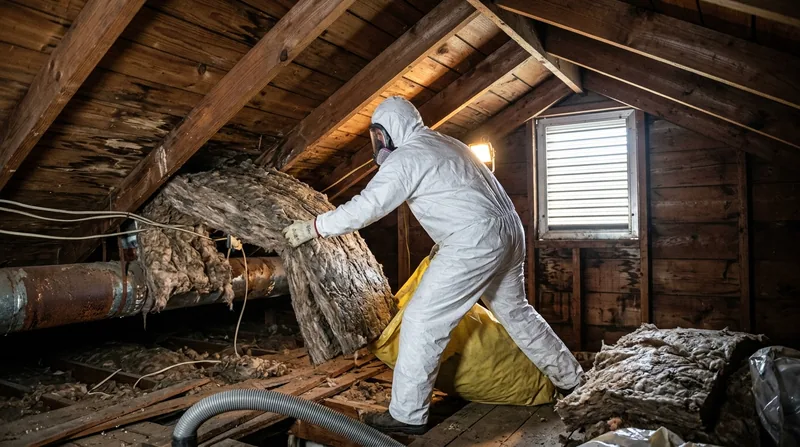




Military families rotating through Onslow County leave behind old insulation between tenants, and that turnover happens fast in Jacksonville. When fiberglass batts have absorbed moisture from vented crawl spaces, or when foam has been installed poorly without proper thickness specs or mechanical ventilation during cure, the only honest answer is removal and a fresh start. Insulation removal in Jacksonville clears the space so new foam can go in right, with the correct R-value, the right density per pass, and the controlled conditions that prevent the smell and off-gassing that plague bad installations. We remove old, damp or failed insulation from attics and crawl spaces across Jacksonville, Sneads Ferry, Richlands, Swansboro and the Crystal Coast so the substrate is ready for spray foam or blown-in cellulose. That means pulling out wet fiberglass, stripping foam that was never cured properly, and hauling away insulation that has settled or harbored moisture for years. The sandy coastal-plain ground under most Jacksonville homes means vented crawl spaces pull in damp air for months, and that moisture works upward through floors and into rim joists. Removing the old insulation is the precondition of every retrofit, and doing it right means the new system has a fighting chance.
Why Insulation Removal Matters in Jacksonville's Rental and Military Housing Market
Jacksonville's housing stock grew up around the military, and rental turnover is constant. Families rotate through ranches and two-story subdivisions across Hubert, Richlands and Sneads Ferry, and between tenants, insulation gets reworked almost as often as it goes into new construction. Old fiberglass batts that have absorbed humidity from vented crawl spaces become a liability, not an asset. Foam that was sprayed without mechanical ventilation during cure, or installed at the wrong thickness, will off-gas for months and make a rental unit unrentable. Removing that failed insulation and starting fresh is not just a cost, it is a compliance and liability necessity.
- We pull out settled, compressed or moisture-logged fiberglass from attics and crawl spaces.
- We strip foam that was installed without proper ratio control or ventilation during cure.
- We haul away insulation debris to licensed facilities so the space is clean and ready for new work.
- We document what was removed and why, so the next contractor knows what they are working with.
- We leave the substrate dry and inspected before any new foam or blown-in material goes in.
Removing bad insulation is the first step of a retrofit that will actually hold its R-value and keep moisture out of the crawl space and attic.
Key info: Vented crawl spaces in Jacksonville pull in damp coastal air for months, so old fiberglass insulation absorbs that moisture and loses its R-value. Removal clears the way for closed-cell spray foam that resists moisture and seals the rim joist and band joist against air infiltration. See our crawl space spray foam insulation service for the next step after removal.
How We Remove Insulation in Jacksonville: Step by Step
Insulation removal is not demolition, it is precision work. We assess what is in place, identify any contamination or moisture, and pull it out in a way that protects the structure and the surrounding materials. In Jacksonville's humid climate, moisture is almost always present in old insulation, so we work with mechanical ventilation and proper containment. The goal is a clean, dry substrate ready for new foam or blown-in cellulose, with no dust or debris left behind.
- We inspect the attic or crawl space and identify the type and condition of existing insulation.
- We set up mechanical ventilation and containment to manage dust and any off-gassing from old foam.
- We pull out batts, blankets or foam, working methodically to avoid disturbing the substrate.
- We haul debris to a licensed disposal facility and leave the space clean and ready.
- We photograph the cleaned space and note any structural issues, moisture sources or air leaks found during removal.
- We provide a written summary of what was removed, its condition, and what the new insulation will address.
The removal process takes one to three days depending on the size of the space and the type of insulation being pulled out.
Local example: A rental property in Jacksonville with fiberglass batts in the attic and a vented crawl space underneath. The batts have settled and absorbed moisture from summer humidity. We remove the batts, inspect the rim joist for air leaks and moisture, haul the debris, and leave the attic clean and the rim joist exposed for closed-cell foam. Total time: two days. The property is then ready for new tenants and a retrofit that will actually control moisture and energy loss.
Insulation Removal Methods and When to Use Each
| Approach | Description | Best for |
|---|---|---|
| Fiberglass batt removal | Hand-pull batts and blankets, bag and haul. Minimal dust if material is not disturbed excessively. | Attics and crawl spaces with standard R-13, R-19, or R-21 batts that have not been compressed or contaminated. |
| Spray foam stripping | Cut and peel foam from substrate using hand tools and mechanical ventilation to manage vapors. | Attics or crawl spaces where foam was installed without proper cure, or where off-gassing is a tenant or rental liability. |
| Blown-in cellulose removal | Vacuum extraction of loose-fill cellulose, dust control with negative air pressure. | Attics where cellulose has settled, compacted or absorbed moisture and no longer meets R-value specification. |
| Moisture assessment and substrate prep | Visual inspection and documentation of moisture, mold growth, or structural damage before removal proceeds. | Any crawl space or attic where moisture or contamination is suspected, so the next contractor knows what they are inheriting. |
| Hazardous material evaluation | Identification of vermiculite, asbestos-containing materials, or other regulated substances. We flag and refer, never disturb. | Older homes in Jacksonville where insulation dates to the 1970s or 1980s and may contain asbestos or other regulated materials. |
Each method is chosen based on what is actually in the space and the condition it is in. We do not use a one-size-fits-all approach.
Insulation Removal Cost in Jacksonville: What to Expect
The cost of insulation removal in Jacksonville depends on the size of the space, the type of insulation being pulled out, and how much of it has settled or been contaminated. A straightforward attic removal in a single-story ranch starts around $950 to $1,200 and covers the labor, mechanical ventilation, containment, and haul-away. A crawl space removal, which involves more careful handling because of moisture and the risk of stirring up settled material, typically runs $1,200 to $1,800 depending on whether the space is vented, has standing water, or requires special precautions. The bigger the space and the worse the condition of the old insulation, the higher the cost. Access matters too: a tight crawl space with low headroom takes longer than an open attic. Contamination or moisture that requires extra ventilation or protective measures will add to the price.
Getting two or three estimates is smart because the scope of removal work varies by contractor and by what they find on site. One contractor may quote a straightforward pull-and-haul, while another may identify moisture or structural issues that require extra steps. A written estimate should specify what is being removed, how long it will take, what equipment will be used, and where the debris will go. See our full pricing guide for typical ranges across our service area.
The removal cost is almost always worth it because bad insulation is a liability, not a savings. A rental property with failed foam or moisture-logged fiberglass will lose tenants and draw complaints. A home with old settled batts is losing energy and money every month. Removing it and installing new foam or blown-in material is the only way to get back to code and real R-value.
What to Look for When Hiring a Spray Foam Insulation Contractor Near Me in Jacksonville
Finding the right contractor for insulation removal in Jacksonville means checking a few concrete things. Start with insurance: we are fully insured and can provide proof of coverage on request. Get multiple estimates and compare what each one actually includes. A good estimate will specify the type of insulation being removed, the square footage or board footage, the method, the timeline, and where debris goes. It should also address any moisture, contamination or structural issues found during the walk-through. Ask for references from recent rental or residential removal jobs in Jacksonville, Swansboro or Richlands. A contractor who has done work in your neighborhood will know the local building stock and climate challenges.
Verify that the contractor understands Jacksonville's building code and permitting. Insulation removal itself does not typically require a permit, but if the work uncovers structural issues or if new foam is going in afterward, the next phase may. A contractor who can explain what applies at your address, and who defers to the local building department when questions arise, is the one who will keep you compliant. Check that they carry the right insurance and that they can be reached if questions come up after the work is done. Call us at (910) 554-3447 for a free estimate and we will walk you through exactly what we will remove, how long it will take, and what the next step is.
Insulation Removal in Jacksonville: Pricing Guide
| Service | Price | Details |
|---|---|---|
| Attic fiberglass batt removal | Starting at $950 | Labor, ventilation, containment, haul-away for single-story ranch or townhome attic, up to 1,200 sq ft |
| Crawl space insulation removal | Starting at $1,200 | Labor, ventilation, moisture assessment, haul-away for vented or sealed crawl space, access and headroom dependent |
| Spray foam stripping | Starting at $1,400 | Removal of failed or off-gassing foam, mechanical ventilation during cure, disposal, substrate inspection and documentation |
| Large or complex removal | On estimate | Multi-story attics, contaminated material, moisture remediation, structural issues, or hazardous material evaluation require site visit |
| Travel | Included | No separate mileage or call-out fee within Jacksonville and surrounding Onslow County service areas |
| Free estimate | No obligation | Written quote within 24 hours, (910) 554-3447, covers scope, timeline, method, haul-away, and next steps |
Indicative pricing, the exact cost depends on square footage, finish, and site access. Free personalized estimate within 24h at (910) 554-3447.


